

In today’s rapidly evolving digital landscape, establishing an online store is only half the battle. Succeeding in the e-commerce world demands an innovative and robust digital marketing strategy. With the global shift in consumer behavior favoring online shopping, brands must embrace data-driven, customer-centric tactics to attract, convert, and retain buyers. This is where Digital Marketing for E-Commerce Stores becomes a game-changer—empowering brands to stand out, scale, and sustain.
In today’s online marketplace, Digital Marketing for E-Commerce Stores has become an essential force that fuels the success and sustainability of any e-commerce venture. From search engines and social platforms to email inboxes and affiliate networks, the modern consumer interacts with brands in a variety of online spaces. Each touchpoint offers an opportunity to influence purchasing decisions—if approached with precision and intent.
This comprehensive guide explores essential Digital Marketing for E‑Commerce Stores—techniques tailored specifically for online businesses. Whether you’re an emerging D2C brand or a thriving multi‑category marketplace, the strategies presented here will help you navigate the crowded digital landscape, amplify your visibility, and grow revenue streams sustainably. Let’s delve into the core components that drive success in e‑commerce digital marketing.
1. Defining Your E-Commerce Brand

Before diving into technical strategies, it’s critical to define who you are as a brand. A well-articulated brand identity lays the foundation for all Digital Marketing for E-Commerce Stores. It distinguishes your online store in a crowded market, builds trust, and nurtures emotional connections with customers.
Start by identifying your unique value proposition (UVP)—what makes your products or services different from competitors? Perhaps you offer eco-friendly packaging, locally sourced materials, or highly personalized items. Whatever your niche, highlight it consistently across your digital channels.
Develop detailed customer personas to guide content and campaign creation. Consider demographics, psychographics, pain points, and aspirations. By understanding your ideal customer, you can create targeted messages that resonate and drive action—a core principle in Digital Marketing for E-Commerce Stores.
Develop detailed customer personas to guide content and campaign creation. Consider demographics, psychographics, pain points, and aspirations. By understanding your ideal customer, you can create targeted messages that resonate and drive action—a core principle in Digital Marketing for E-Commerce Stores.
Visual branding also plays a crucial role. Your logo, color palette, typography, and imagery should remain consistent across your website, emails, and social media to ensure recognizability. Moreover, maintain a brand voice—be it friendly, sophisticated, humorous, or educational—that matches your target audience’s expectations.
Remember, in e-commerce, your store is your identity. Unlike physical retailers, you don’t have the luxury of in-person interaction. Therefore, your brand identity needs to carry the weight and create impact entirely through digital channels.
Develop detailed customer personas to guide content and campaign creation. Consider demographics, psychographics, pain points, and aspirations. By understanding your ideal customer, you can create targeted messages that resonate and drive action—a core principle in Digital Marketing for E-Commerce Stores.
Visual branding also plays a crucial role. Your logo, color palette, typography, and imagery should remain consistent across your website, emails, and social media to ensure recognizability. Moreover, maintain a brand voice—be it friendly, sophisticated, humorous, or educational—that matches your target audience’s expectations. Strong branding is a foundational pillar of Digital Marketing for E-Commerce Stores, helping to create a memorable and trustworthy digital presence.
Remember, in e-commerce, your store is your identity. Unlike physical retailers, you don’t have the luxury of in-person interaction. Therefore, your brand identity needs to carry the weight and create impact entirely through digital channels.
2. SEO & Content Marketing
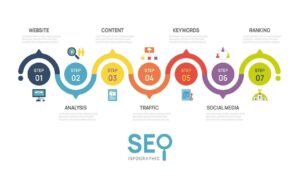
Search Engine Optimization (SEO) and content marketing are the dynamic duo of organic digital reach. Together, they help you attract high-intent traffic without constantly paying for clicks—making them essential components of Digital Marketing for E-Commerce Stores.
Begin with keyword research using tools like Google Keyword Planner, Ahrefs, or Ubersuggest. Target a mix of purchase-driven keywords (like “purchase leather backpack online”) and knowledge-based queries (such as “tips for selecting the ideal travel backpack”). Integrate these naturally into product descriptions, meta tags, blog posts, and headers.
Optimize your product pages with SEO-friendly URLs, alt texts for images, schema markup, and mobile responsiveness. Ensure quick loading times and easy navigation—factors that impact both SEO rankings and user experience.
As a core pillar of Digital Marketing for E-Commerce Stores, content marketing enhances SEO efforts by delivering meaningful insights that establish your brand’s credibility and expertise. Launch a blog that covers tutorials, buyer guides, product comparisons, and customer stories. For example, a skincare e-commerce store could publish posts like “10 Natural Ingredients Your Skin Will Love” or “Day vs. Night Routine: Which Products to Use?”
Consider incorporating video content, such as how-tos, behind-the-scenes tours, or explainer animations, which improve dwell time and reduce bounce rates. As part of a strong Digital Marketing for E-Commerce Stores approach, video enhances user engagement and boosts SEO performance across platforms.
SEO and content marketing take time to show results, but their long-term value is unmatched. They help build a loyal audience, establish thought leadership, and drive consistent traffic with minimal recurring cost.
3. Pay-Per-Click (PPC) & Paid Advertising

While SEO is a slow burn, PPC advertising offers instant visibility. As a crucial component of Digital Marketing for E-Commerce Stores, paid campaigns on platforms like Google Ads, Facebook, Instagram, and TikTok allow you to target specific demographics, interests, and behaviors with precision.
For e-commerce, Google Shopping Ads are particularly effective. They display product images, prices, reviews, and direct purchase links right on the search results page. As part of Digital Marketing for E-Commerce Stores, ensuring your Google Merchant Center is properly set up and your product feed is accurate and updated is essential for visibility and performance.
Social media advertising allows for even greater creativity and audience targeting. Use Facebook’s Lookalike Audiences, Instagram Reels ads, and TikTok Spark Ads to reach new customers who resemble your best buyers.
A/B test different ad formats—carousel, single image, video, dynamic ads—and messaging to identify what resonates most with your audience. Within the scope of Digital Marketing for E-Commerce Stores, this kind of data-driven experimentation is essential for refining strategy. Pay close attention to click-through rates (CTR), cost per acquisition (CPA), and return on ad spend (ROAS) to optimize your campaigns effectively.
Also, incorporate retargeting campaigns to re-engage past visitors or cart abandoners. These are high-conversion prospects who just need an extra push—perhaps a discount code or limited-time offer—to complete their purchase journey. As part of an effective Digital Marketing for E-Commerce Stores strategy, retargeting plays a vital role in maximizing conversions from already-interested shoppers.
Though PPC requires constant monitoring and optimization, when executed strategically, it can deliver tremendous ROI and fuel rapid, scalable growth for online stores.
4. Social Media Marketing

Social media Marketing platforms have evolved beyond mere engagement channels—they’ve transformed into complete digital marketplaces. Leveraging them strategically as part of Digital Marketing for E-Commerce Stores allows brands to build community, showcase products, and drive conversions.
Select platforms based on your audience. If you’re targeting Gen Z, TikTok and Instagram are must-haves. For B2B or niche products, Pinterest and Facebook groups might work better.
Organic strategies include regular posting, storytelling, behind-the-scenes content, user-generated content (UGC), and engaging with followers. As part of an effective Digital Marketing for E-Commerce Stores approach, run hashtag campaigns, polls, giveaways, and influencer takeovers to increase interaction.
Influencer marketing has become especially potent for e-commerce. Partnering with micro-influencers (those with 10k–100k followers) often yields higher engagement at a lower cost than big-name endorsements.
Utilize live selling features on platforms like Facebook and Instagram, where hosts demonstrate and sell products in real-time—a trend growing rapidly in Asia and spreading globally. As part of Digital Marketing for E-Commerce Stores, don’t overlook social commerce capabilities such as Instagram Shops and Facebook Shop tabs. These tools allow users to browse and purchase directly within the app, streamlining the buying journey.
Authenticity and consistency are key—today’s consumers want to connect with real stories, not robotic promotions.
5. Email Marketing & Automation

Despite being one of the oldest digital marketing tools, email marketing remains a powerhouse for e-commerce. Within the scope of Digital Marketing for E-Commerce Stores, it offers unparalleled personalization, segmentation, and ROI.
Start by building a permission-based subscriber list. Offer discounts, downloadable guides, or loyalty rewards in exchange for email sign-ups. Strategically incorporate pop-ups, exit-intent windows, and embedded forms throughout your website to maximize user interaction.
Segment your list based on behavior, interests, purchase history, and engagement. Within Digital Marketing for E-Commerce Stores, this level of precision allows you to send personalized recommendations, curated collections, and exclusive offers to specific segments, significantly improving open and conversion rates.
Automation tools like Klaviyo, Mailchimp, or Omnisend empower brands to create triggered workflows based on user behavior—an essential component of Digital Marketing for E-Commerce Stores. Some high-impact automated emails include:
- Welcome email series: Warmly introduce new subscribers and help them get to know your brand better.
- Abandoned cart reminders: Recover lost sales with follow-up nudges
- Post-purchase emails: Encourage reviews, upsells, or loyalty rewards
- Win-back campaigns: Re-engage inactive customers with tailored offers
Keep your content concise, visually appealing, and aligned with your brand. An eye‑catching subject line, a definitive call‑to‑action, and flawless mobile responsiveness are absolute essentials.
When done right, email marketing not only drives revenue but also strengthens brand loyalty and customer lifetime value.
6. Affiliate & Partnership Marketing
Affiliate marketing is a powerful tactic within Digital Marketing for E-Commerce Stores, allowing brands to expand their reach through trusted third-party publishers, bloggers, and content creators—without any upfront cost. You only pay a commission when a sale is successfully made, making it a performance-driven strategy.
To get started, set up an affiliate program using platforms like ShareASale, Refersion, or Impact. Clearly define your commission structure, cookie duration, and promotional guidelines to attract the right affiliates. Providing them with high-quality creatives, banners, and tracked links will help them market your products more effectively, driving both traffic and conversions.
Recruit affiliates who align with your brand these could be niche bloggers, YouTubers, or social influencers with engaged followings. Provide them with creative assets, tracking links, and performance dashboards to streamline collaboration.
Explore brand partnerships for co-marketing campaigns. For example, a fitness apparel brand might partner with a nutrition company for a “New Year, New You” campaign, sharing email lists, bundled offers, or webinars.
Affiliate and partnership marketing not only diversifies your traffic sources but also builds credibility through trusted recommendations.
7. Analytics & Data-Driven Optimization
Digital marketing for e-commerce is incomplete without performance analysis. Every action should be backed by data and refined through iteration.
Set up Google Analytics and integrate it with your e-commerce platform. Use enhanced e-commerce tracking to monitor key metrics like:
- Conversion Rate (CR)
- Average Order Value (AOV)
- Customer Lifetime Value (CLV)
- Cart Abandonment Rate
- Traffic Sources
Beyond Google Analytics, tools like Hotjar, Crazy Egg, and Microsoft Clarity provide heatmaps and session recordings to visually understand user behavior—an essential part of Digital Marketing for E-Commerce Stores. These insights help identify friction points, optimize user experience, and boost engagement.
Conduct A/B tests on product pages, CTAs, email subject lines, and checkout flows. Even minor tweaks—like adjusting button color or headline wording—can yield substantial improvements in conversion rates.
Use attribution models to understand which channels contribute most to conversions. This empowers smarter budget allocation across SEO, social, PPC, and email campaigns.
Incorporating data-backed decisions ensures your digital strategy isn’t based on guesswork but guided by performance—fueling growth and ROI.
8. Emerging Trends & Future-Ready Approaches
Staying ahead of the curve is vital in the fast-moving digital space. Various new technologies and evolving trends are transforming the landscape of Digital Marketing for E-Commerce Stores.
AI-Powered Personalization: Machine learning tools analyze user behavior to recommend products, customize emails, and predict purchase patterns. These intelligent systems help brands deliver hyper-personalized experiences that boost conversions and customer satisfaction.
- Chatbots and Conversational Commerce: AI chat tools like Chatfuel and Tidio provide instant responses, assist in purchases, and improve customer service 24/7.
- Voice Search & Smart Assistants: Optimize product listings for voice search by using natural language and answering questions directly.
- AR & VR Integration: Allow customers to “try before they buy” using augmented reality—especially useful for fashion, furniture, and cosmetics.
- Sustainable and Ethical Branding: Conscious consumers seek transparency, eco-friendly packaging, and ethical sourcing. Share your brand values and CSR activities openly.
- Omnichannel Marketing: Integrate online and offline experiences. Offer in-store pickups, mobile-exclusive discounts, or consistent messaging across web, app, and email.
Being future-ready means not only adopting new tools but also adapting your mindset for continuous learning and flexibility.
best freelance digital marketer in kottakkal : Anas
Conclusion & Action Plan
In the high-stakes arena of e-commerce, Digital Marketing for E-Commerce Stores is the secret weapon that separates thriving brands from those lost in the digital crowd. It’s not just about being online—it’s about being strategic. From SEO and PPC to email automation, influencer partnerships, and data-driven insights, each tactic works in harmony to drive visibility, conversions, and long-term customer loyalty. When executed effectively, digital marketing becomes more than a growth tool—it becomes the backbone of a scalable and resilient e-commerce business.
To recap, here’s a simple 5-step action plan for implementing what you’ve learned:
- Define your brand identity and ensure it’s reflected across all channels.
- Drive organic traffic with optimized SEO and engaging content.
- Accelerate growth through paid ads and social media strategies.
- Build loyalty using email automation and customer-centric messaging.
- Continuously improve by measuring KPIs and experimenting with data-driven insights.
Stay adaptable, keep the customer at the center, and treat digital marketing as a long-term investment. The tools will evolve, platforms will shift, but the core principles value, consistency, personalization will always deliver results.
Let your online store not just exist, but lead in your niche. Digital marketing is the key. Unlock it now.
Author: Fathimathul Shameena