
The digital revolution has drastically changed the marketing landscape, and nowhere is this transformation more profound than in the business-to-business (B2B) sector. B2B companies have moved beyond traditional methods like cold calling, printed brochures, and trade shows. Instead, they are leveraging sophisticated digital tools and platforms to build relationships, generate leads, and drive sales. At the heart of this evolution lies the importance of Data-Driven Digital Marketing Strategies—a cohesive approach that aligns digital channels with business goals to attract and convert high-value clients.
Unlike business-to-consumer (B2C) marketing, where emotional appeal and impulsive decisions play a large role, B2B marketing revolves around logic, value, and long-term relationships. The target audience often consists of teams of decision-makers, including procurement officers, CFOs, managers, and technical specialists, who are looking for reliability, expertise, and measurable ROI. This means B2B digital strategies must be thoughtful, consistent, and educational in nature. They must build credibility over time and move leads through a longer, more complex sales funnel.
The Foundations of a B2B Digital Strategy

An effective B2B digital marketing strategy starts with a thorough understanding of the target audience. This goes beyond knowing the industry or job title. Marketers must understand the decision-making process within organizations, the specific pain points clients face, and the digital habits of key stakeholders. Data-Driven Digital Marketing Strategies rely on detailed buyer personas supported by CRM data, website analytics, and sales insights—forming the cornerstone of any meaningful approach.
The next essential element is alignment between marketing and sales teams. In successful B2B organizations, digital marketing is not a siloed department; it works hand in hand with sales to nurture leads, track engagement, and drive conversions. Shared goals, integrated tools like CRM and marketing automation platforms, and continuous feedback loops ensure that every campaign is directly contributing to revenue objectives.
Setting clear and measurable goals is just as crucial to a successful strategy. Whether the objective is to increase website traffic, generate qualified leads, improve brand visibility, or close enterprise-level deals, every part of the digital strategy should serve those goals. Data-Driven Digital Marketing Strategies help ensure that these objectives inform channel selection, content direction, and performance metrics—enabling more focused and results-oriented execution.
Content Marketing: The Engine of B2B Engagement
In the B2B landscape, content isn’t just king—it serves as the crucial link between building awareness and driving conversions. Businesses are constantly searching for solutions, insights, and expertise. Data-Driven Digital Marketing Strategies emphasize the creation of high-quality, valuable content that positions a company as a thought leader and fosters trust among potential clients. The format can vary—blogs, whitepapers, eBooks, case studies, webinars, podcasts, and videos—but the goal remains the same: to educate and inform.
In B2B environments, long-form content often delivers strong results, particularly when it provides in-depth insights or practical value. A detailed whitepaper on industry trends or a case study demonstrating how your solution improved a client’s efficiency can have a significant impact. This content can also be repurposed across different channels, increasing its reach and extending its lifespan.
Another critical component is SEO optimization. Since most B2B buyers begin their research on search engines, ensuring that your content ranks for relevant keywords is essential. Data-Driven Digital Marketing Strategies incorporate technical SEO, high-quality backlinks, fast-loading pages, and optimized meta descriptions to boost visibility and traffic. Keyword stuffing or low-value content won’t suffice Google’s algorithms reward depth, clarity, and authority, making thoughtful, strategic SEO a non-negotiable element.
Leveraging LinkedIn and Other Paid Media

Among all social media platforms, LinkedIn stands out as the powerhouse for B2B marketing. Its business-oriented environment, rich targeting options, and content-friendly feed make it ideal for reaching decision-makers. Data-Driven Digital Marketing Strategies leverage LinkedIn for both organic efforts—such as publishing thought leadership posts, engaging in industry conversations, and participating in relevant groups—and paid campaigns.
LinkedIn Ads offer highly targeted advertising by allowing you to focus on specific industries, job titles, company sizes, and professional interests. Sponsored content, InMail, and lead gen forms are particularly effective formats for B2B marketers. When used strategically, LinkedIn can generate qualified leads and build brand authority within a specific niche.
LinkedIn is not the only platform with value. Google Ads can capture search intent at the top of the funnel, while display ads on industry websites can reinforce brand recognition. Retargeting campaigns also play a vital role in keeping your brand top-of-mind for users who have interacted with your site but haven’t converted yet. Data-Driven Digital Marketing Strategies guide the selection and timing of these channels to maximize ROI across the buyer’s journey.
Budget allocation for paid media should be based on your funnel strategy. Awareness campaigns may require broader targeting, while bottom-of-funnel efforts should focus on nurturing high-value leads with personalized messaging and strong calls to action.
Email Marketing and Marketing Automation

Email continues to be one of the most effective tools in a B2B marketer’s arsenal—especially when it is personalized, segmented, and timely. In today’s landscape, mass cold email campaigns tend to deliver minimal results and are often ineffective. Data-Driven Digital Marketing Strategies focus on lead nurturing and leveraging automation to drive higher engagement and conversion.
Using marketing automation platforms like HubSpot, Marketo, or ActiveCampaign, businesses can design sophisticated workflows that guide prospects through the buying journey. A lead who downloads an eBook might receive a series of follow-up emails offering additional resources, demo invitations, or consultation offers. Each touchpoint is informed by the user’s behavior and preferences, making the interaction more meaningful and less intrusive.
Personalization is critical. Simply addressing recipients by their name is no longer sufficient for meaningful engagement. Smart B2B marketers personalize based on industry, company size, previous interactions, and specific interests. Data-Driven Digital Marketing Strategies empower marketers to craft hyper-relevant emails that drive stronger open and conversion rates. Tracking dynamic metrics like open rates, click-through rates, bounce rates, and unsubscribe rates is crucial for assessing the effectiveness of your email campaigns. These indicators provide valuable feedback and help refine your approach over time. Consistent A/B testing of subject lines, layouts, and messaging will also improve campaign effectiveness.
Data-Driven Decision Making and Analytics
A digital strategy that lacks data is simply based on assumptions. In B2B marketing, Data-Driven Digital Marketing Strategies play a pivotal role in campaign optimization, budget allocation, and ROI measurement. Platforms like Google Analytics, HubSpot, Salesforce, and LinkedIn Campaign Manager provide detailed insights into user behavior, conversion paths, and content performance.
The ability to track leads from their first website visit through to final purchase is crucial. This allows marketers to identify which channels and content pieces are most effective and to invest accordingly. It also enables attribution modeling, helping to assign credit to various touchpoints throughout the customer journey. Data-Driven Digital Marketing Strategies rely on this visibility to fine-tune campaigns and maximize ROI.
Dashboards and reporting tools need to be tailored to align with your unique objectives and performance indicators. Monthly reports might include website traffic, lead quality, cost per acquisition, time-on-site, bounce rate, and social engagement. Over time, these insights not only inform tactical adjustments but also support strategic planning and resource management.
The Role of Account-Based Marketing (ABM)
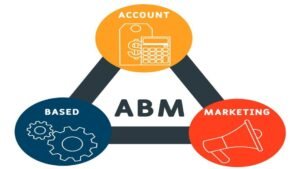
For companies targeting high-value clients or enterprise-level accounts, Account-Based Marketing (ABM) is a highly effective strategy. ABM turns the traditional funnel on its head by focusing first on high-value accounts, then developing customized campaigns to engage and convert them. Data-Driven Digital Marketing Strategies are central to ABM success, enabling precise targeting, personalized messaging, and real-time performance tracking. This method relies on strong coordination and smooth collaboration between sales and marketing teams to be effective. Together, they identify target companies, research key decision-makers, and develop custom content and outreach strategies. Digital tools such as intent data platforms and CRM integrations play a vital role in tracking engagement and optimizing campaign touchpoints.
ABM often includes personalized landing pages, industry-specific webinars, customized email sequences, and direct outreach from sales reps. Although it requires more upfront effort, ABM tends to yield higher conversion rates, stronger client relationships, and larger deal sizes.
Building Trust through Social Proof and Testimonials
Trust is a crucial currency in B2B marketing. Because purchases are often significant and long-term, buyers need assurance that your solution delivers what it promises. This is where social proof becomes essential. Data-Driven Digital Marketing Strategies amplify the impact of social proof by ensuring it reaches the right audience at the right moment in the buyer’s journey. Case studies, client testimonials, third-party reviews, and certifications all add credibility to your messaging.
Case studies should go beyond surface-level success. They should clearly outline the client’s challenge, the solution your business provided, and the measurable impact it had. Integrating Data-Driven Digital Marketing Strategies into these narratives shows how insights and analytics informed decision-making, ultimately delivering results. Including statistics, quotes, and visuals makes them more engaging and credible.
Publishing video testimonials or client interviews can further enhance authenticity. Featuring recognizable brands or industry leaders adds weight to your claims and builds trust, helping new prospects feel more confident in partnering with your company.
Mobile Optimization and UX Considerations

B2B buyers are increasingly using mobile devices to research products and make purchasing decisions. A digital strategy that ignores mobile optimization risks alienating a large portion of its audience. Websites, landing pages, and email templates must be responsive, fast-loading, and easy to navigate on all devices. Data-Driven Digital Marketing Strategies ensure that performance on mobile is continuously analyzed and improved to meet user expectations and business goals.
Beyond mobile, overall user experience (UX) plays a significant role in conversion. Clear navigation, intuitive forms, strong calls to action, and helpful chat features improve engagement and reduce bounce rates. Data-Driven Digital Marketing Strategies guide these UX enhancements by analyzing user behavior and performance metrics, ensuring every design choice supports business goals. Investing in UX design improves user satisfaction while also boosting SEO effectiveness and increasing lead generation chances.
Best freelance digital marketer in kottakkal : anas
Staying Agile in a Rapidly Changing Landscape

Digital marketing is dynamic. Algorithms change, audience behaviors evolve, and new platforms emerge regularly. For B2B marketers, staying ahead means adopting an agile mindset. This includes continuously testing new approaches, staying updated with industry trends, and being ready to pivot when necessary. Data-Driven Digital Marketing Strategies provide the foundation for this agility by offering real-time insights that guide smarter, faster decisions.
For example, the rise of AI and automation is transforming how content is created and distributed. Voice search, video SEO, and interactive content formats are becoming increasingly popular and influential in digital marketing. Data-Driven Digital Marketing Strategies help B2B marketers assess which of these innovations deliver real value, ensuring that efforts remain aligned with brand values and client expectations.
Attending webinars, following industry blogs, participating in digital communities, and engaging in ongoing training are all important practices for maintaining a competitive edge in today’s fast-moving digital landscape.
Conclusion
An effective B2B digital marketing strategy is not a universal template—it must be tailored to fit specific business goals and audience needs. It requires deep audience insight, alignment between teams, consistent content creation, platform expertise, and a commitment to continuous improvement. Data-Driven Digital Marketing Strategies empower businesses to refine these efforts, ensuring every decision is backed by insights that drive performance. Whether you’re targeting small businesses or Fortune 500 enterprises, the key lies in delivering value, building trust, and optimizing every interaction through data and creativity.
As technology advances and customer expectations grow, companies that embrace a strategic, integrated, and agile approach through Data-Driven Digital Marketing Strategies will be best positioned to lead their industries. Investing in a thoughtful B2B strategy today lays the groundwork for sustainable growth, stronger partnerships, and long-term success in the evolving digital marketplace.
Author: Fathimathul Shameena